Predictors of nutritional status and fluid balance among ESRD patients undergoing hemodialysis
Downloads
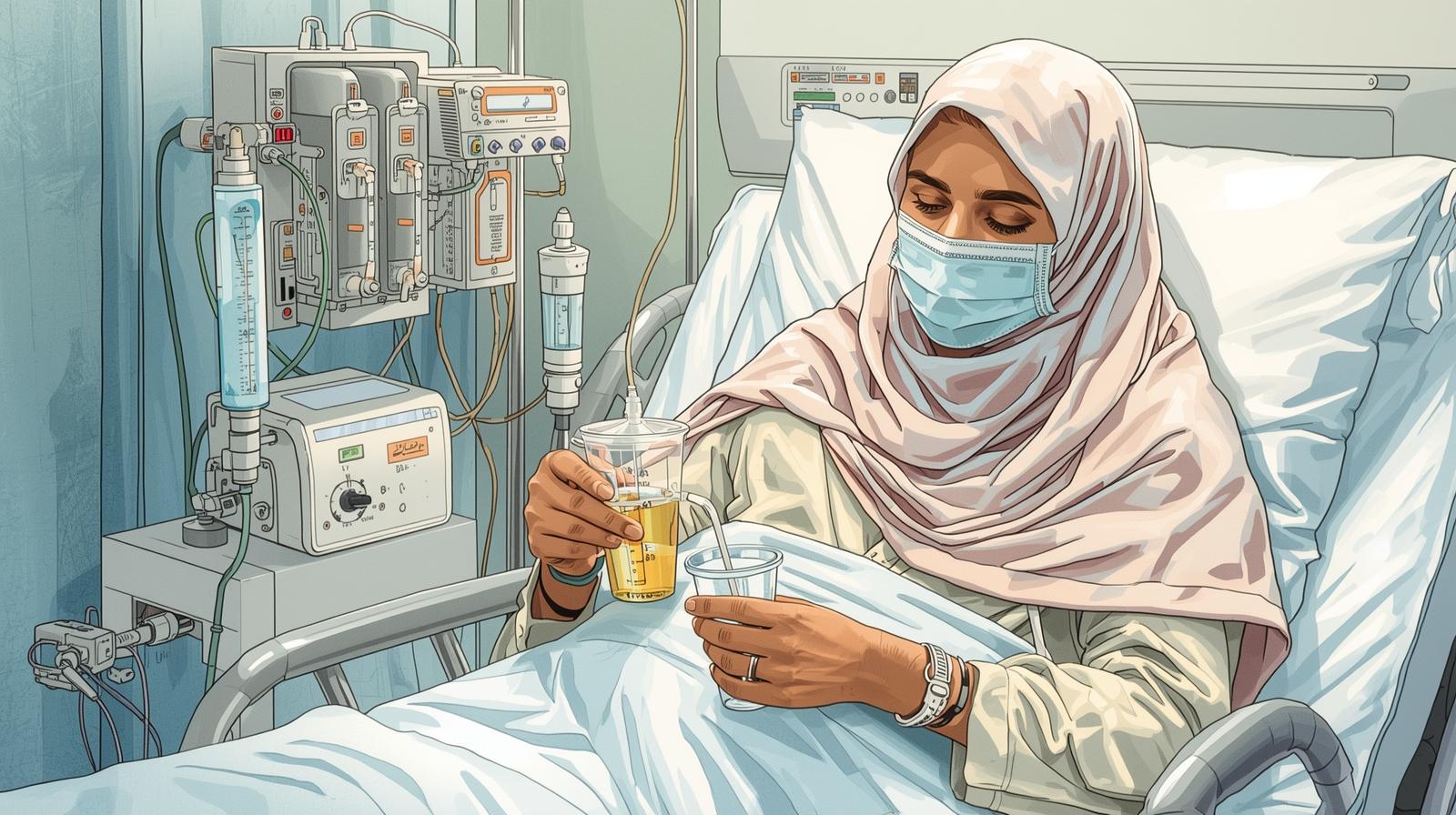
Introduction: Patients with End-Stage Renal Disease (ESRD) undergoing hemodialysis must accommodate significant lifestyle modifications, emphasizing nutritional management and fluid restriction, to realize optimal therapeutic outcomes due to the stringent adherence required by the treatment. Deviations from adherence can precipitate complications, compromising the clinical status of patients.
Methods: This study employed a quantitative, correlational, and cross-sectional methodology to evaluate 245 ESRD patients undergoing hemodialysis who met the inclusion criteria. Data were acquired utilizing a multistage sampling technique, incorporating proportional random and consecutive sampling, and employing questionnaires addressing knowledge, family support, and perception (B-IPQ).
Results: The participants' average age was 51.37±11.804 years, with males representing 60% (147 individuals) of the sample. A significant 81.6% (200 participants) demonstrated proficient knowledge levels. Family support was assessed as satisfactory for 90.6% (222 participants), and 82% (201 participants) exhibited positive perceptions. The analysis identified a significant correlation between Duration of Illness and IDWG (p<0.05), evidenced by a Pearson's correlation coefficient (r) of 0.153. A noteworthy inverse relationship between knowledge levels and Ureum (p<0.05) was also observed.
Conclusions: The findings suggest a correlation between knowledge and nutritional management, particularly regarding urea levels, while the duration of hemodialysis is correlated with IDWG. Conversely, factors related to family support did not demonstrate a significant correlation with aspects of nutrition and fluid management, such as urea, creatinine, Hb, sodium, and potassium.
Başer, E., & Mollaoğlu, M. (2019). The effect of a hemodialysis patient education program on fluid control and dietary compliance. Hemodialysis International, 23(3), 392–401. https://doi.org/10.1111/hdi.12744
Beerappa, H., & Chandrababu, R. (2019). Adherence to dietary and fluid restrictions among patients undergoing hemodialysis: An observational study. Clinical Epidemiology and Global Health, 7(1), 127–130. https://doi.org/10.1016/j.cegh.2018.05.003
Bello, A. K., Okpechi, I. G., Osman, M. A., Cho, Y., Htay, H., Jha, V., Wainstein, M., & Johnson, D. W. (2022). Epidemiology of haemodialysis outcomes. In Nature Reviews Nephrology (Vol. 18, Issue 6, pp. 378–395). Nature Research. https://doi.org/10.1038/s41581-022-00542-7
Cao, M., Zheng, S., Zhang, W., & Hu, G. (2023). Progress in the study of nutritional status and selenium in dialysis patients. In Annals of Medicine (Vol. 55, Issue 1). Taylor and Francis Ltd. https://doi.org/10.1080/07853890.2023.2197296
Chen, Y. H., Liu, W. L., Duong, T. Van, Wong, T. C., Chen, H. H., Chen, T. H., Hsu, Y. H., Peng, S. J., & Yang, S. H. (2022). Effect of Different Nutritional Education Based on Healthy Eating Index for HemoDialysis Patients on Dietary Quality and Muscle Mass. Nutrients, 14(21). https://doi.org/10.3390/nu14214617
Coresh, J. (2017). Update on the burden of CKD. In Journal of the American Society of Nephrology (Vol. 28, Issue 4, pp. 1020–1022). American Society of Nephrology. https://doi.org/10.1681/ASN.2016121374
Dantas, L. G. G., De Seixas Rocha, M., Junior, J. A. M., Paschoalin, E. L., Paschoalin, S. R. K. P., & Sampaio Cruz, C. M. (2019). Non-adherence to Haemodialysis, Interdialytic weight gain and cardiovascular mortality: A cohort study. BMC Nephrology, 20(1). https://doi.org/10.1186/s12882-019-1573-x
Durose, C. L., Holdsworth, M., Watson, V., & Przygrodzka, F. (2004). Knowledge of dietary restrictions and the medical consequences of noncompliance by patients on hemodialysis are not predictive of dietary compliance. Journal of the American Dietetic Association, 104(1), 35–41. https://doi.org/10.1016/j.jada.2003.10.016
Fitmawati, K. Z., Rosyidah, D. A. A., & Hartanto, D. (2023). The Relationship Between Nutritional Knowledge and Support Family with Dietary Complience in Chronic Renal Failure Patients at Suyudi General Hospital in Indonesia : Research. International Journal Of Scientific Advances, 4(2). https://doi.org/10.51542/ijscia.v4i2.23
Gluba-Brzózka, A., Franczyk, B., Olszewski, R., & Rysz, J. (2020). The influence of inflammation on anemia in CKD patients. In International Journal of Molecular Sciences (Vol. 21, Issue 3). MDPI AG. https://doi.org/10.3390/ijms21030725
Hansrivijit, P., Chen, Y.-J., Lnu, K., Trongtorsak, A., Puthenpura, M. M., Thongprayoon, C., Bathini, T., Mao, M. A., & Cheungpasitporn, W. (2021). Prediction of mortality among patients with chronic kidney disease: A systematic review. World Journal of Nephrology, 10(4), 59–75. https://doi.org/10.5527/wjn.v10.i4.59
Hulu, T., Prasetyo Budi, N., & Sari, R. P. (2021). RELATIONSHIP OF FAMILY SUPPORT WITH QUALITY OF LIFE OF HEMODIALIZED PATIENTS USING STUDY LITERATURE REVIEW METHOD. In Journal of Vocational Nursing (Vol. 02). www.e-journal.unair.ac.id/JoViN/
Isa, D., & Chan, K. F. (2020). Associations Between Knowledge on Optimal Control of Serum Phosphate, Perceived Social Support, Dietary Phosphorus Intake and Phosphate Compliance Among Hemodialysis Patients. In Article in Malaysian Journal of Medicine and Health Sciences. https://www.researchgate.net/publication/362091615
Isdiarti, R., & Ardian, I. (2020). Correlation of Family Support with Quality of Life of Patient Chronic Renal Failure Undergo Hemodialysis. Jurnal Ners, 15(2). https://doi.org/10.20473/jn.v15i2.22127
Jalalzadeh, M., Mousavinasab, S., Villavicencio, C., Aameish, M., Chaudhari, S., & Baumstein, D. (2021). Consequences of Interdialytic Weight Gain Among Hemodialysis Patients. Cureus. https://doi.org/10.7759/cureus.15013
Jiang, H., Wang, L., Zhang, Q., Liu, D. xiang, Ding, J., Lei, Z., Lu, Q., & Pan, F. (2015). Family functioning, marital satisfaction and social support in hemodialysis patients and their spouses. Stress and Health : Journal of the International Society for the Investigation of Stress, 31(2), 166–174. https://doi.org/10.1002/smi.2541
Kim, H. J., Kim, T. E., Han, M., Yi, Y., Jeong, J. C., Chin, H. J., Song, S. H., Lee, J., Lee, K. B., Sung, S., Han, S. H., Seong, E. Y., Ahn, C., Oh, K. H., & Chae, D. W. (2021). Effects of blood urea nitrogen independent of the estimated glomerular filtration rate on the development of anemia in non-dialysis chronic kidney disease: The results of the KNOW-CKD study. PLoS ONE, 16(9 September). https://doi.org/10.1371/journal.pone.0257305
Kirkeskov, L., Carlsen, R. K., Lund, T., & Buus, N. H. (2021). Employment of patients with kidney failure treated with dialysis or kidney transplantation—a systematic review and meta-analysis. BMC Nephrology, 22(1). https://doi.org/10.1186/s12882-021-02552-2
Kustimah, K., Siswadi, A. G. P., Djunaidi, A., & Iskandarsyah, A. (2019). Factors Affecting Non-Adherence to Treatment in End Stage Renal Disease (ESRD) Patients Undergoing Hemodialysis in Indonesia. The Open Psychology Journal, 12(1), 141–146. https://doi.org/10.2174/1874350101912010141
Maimani, Y. Al, Elias, F., Salmi, I. Al, Aboshakra, A., Alla, M. A., & Hannawi, S. (2021). Interdialytic Weight Gain in Hemodialysis Patients: Worse Hospital Admissions and Intradialytic Hypotension. Open Journal of Nephrology, 11(02), 156–170. https://doi.org/10.4236/ojneph.2021.112013
Moszak, M., Kucharski, M. A., Ewelina, K., & Grzymisławski, M. (2017). The nutritional status and nutrition habits in a group of patients with end stage renal failure treated with hemodialysis. Journal of Medical Science, 86(2). https://doi.org/10.20883/jms.2016.159
Naalweh, K. S., Barakat, M. A., Sweileh, M. W., Al-Jabi, S. W., Sweileh, W. M., & Zyoud, S. H. (2017). Treatment adherence and perception in patients on maintenance hemodialysis: A cross - Sectional study from Palestine. BMC Nephrology, 18(1). https://doi.org/10.1186/s12882-017-0598-2
Ohashi, Y., Sakai, K., Hase, H., & Joki, N. (2018). Dry weight targeting: The art and science of conventional hemodialysis. Seminars in Dialysis, 31(6), 551–556. https://doi.org/10.1111/sdi.12721
Ozen, N., Fatma, •, Cinar, I., Dilek Askin, •, Dilek, •, & Turker, • Turker. (2019). Nonadherence in Hemodialysis Patients and Related Factors: A Multicenter Study.
Spies, H. C., van den Berg, V. L., & Nel, M. (2021). Knowledge, attitude and practices of patients receiving maintenance haemodialysis in Bloemfontein, South Africa. South African Journal of Clinical Nutrition, 34(3), 116–122. https://doi.org/10.1080/16070658.2020.1751415
Wahyuni, E. D., Haloho, F. N. W., Asmoro, C. P., & Laili, N. R. (2019). Factors Affecting Interdialytic Weight Gain (IDWG) in Hemodialysis Patients with Precede-Proceed Theory Approach. IOP Conference Series: Earth and Environmental Science, 246(1). https://doi.org/10.1088/1755-1315/246/1/012034
Webster, A. C., Nagler, E. V., Morton, R. L., & Masson, P. (2017). Chronic Kidney Disease. In The Lancet (Vol. 389, Issue 10075, pp. 1238–1252). Lancet Publishing Group. https://doi.org/10.1016/S0140-6736(16)32064-5
Wu, R., Feng, S., Quan, H., Zhang, Y., Fu, R., & Li, H. (2022). Effect of Self-Determination Theory on Knowledge, Treatment Adherence, and Self-Management of Patients with Maintenance Hemodialysis. Contrast Media and Molecular Imaging, 2022. https://doi.org/10.1155/2022/1416404
Yanmış, S., & Ergüney, S. (2020). Effects of Perception of Health on Hemodialysis Dependent Individuals’ Nonadherence to Diet and Fluid Restriction. In Asian Journal of Pharmacy, Nursing and Medical Sciences (Vol. 8, Issue 3). www.ajouronline.com
Copyright (c) 2025 Jurnal Ners

This work is licensed under a Creative Commons Attribution 4.0 International License.
Authors who publish with Jurnal Ners agree to the following terms:
- Authors transfer the Copyright and grant Jurnal Ners the right of first publication with the work simultaneously licensed under a Creative Commons Attribution 4.0 International License that allows others to remix, adapt and build upon the work with an acknowledgment of the work's authorship and of the initial publication in Jurnal Ners.
- Authors are permitted to copy and redistribute the journal's published version of the work (e.g., post it to an institutional repository or publish it in a book), with an acknowledgment of its initial publication in Jurnal Ners.
Jurnal Ners requires a formal written declaration and transfer of copyright from the author(s) for each article published. We, therefore, ask you to complete and return this form, retaining a copy for your own records. Your cooperation is essential and appreciated. Any delay will result in a delay in publication. The form can be downloaded HERE.