THE COST OF TREATMENT FOR PEDIATRIC TUBERCULOSIS PATIENTS: A CROSS-SECTIONAL STUDY

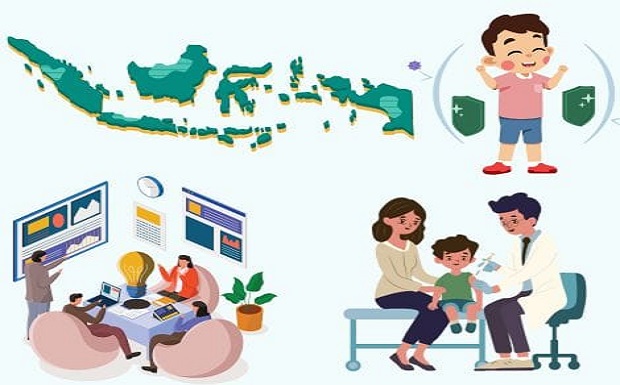
Background: Tuberculosis (TB) is a leading global communicable disease. Pediatric tuberculosis, in particular, is prevalent among the population aged 0-14 years and necessitates a treatment duration of at least six months.
Aims: This study aims to assess the total treatment cost of pediatric tuberculosis patients and determine the factors associated with the total cost.
Methods: A cross-sectional design was employed to collect the retrospective data at a public hospital and PHC in the province-level Special Region of Yogyakarta, Indonesia. Treatment costs are categorized into the following: laboratory costs, professional costs, drug costs, medical and non-medical support costs, and miscellaneous costs. The collected data underwent both descriptive and statistical analysis using regression methods, namely logistic and probit regressions.
Results: The analysis revealed that most patients were between 0 and 2 years old and most of them are school-age, with an average treatment cost of USD 62.80 per patient. The study identified laboratory costs (RR 0.198; 95% CI 0.083-0.314), professional costs (RR 9.402; 95% CI 4.108-14.698), drug costs (RR 5.269; 95% CI 2.326-8.212), and medical support costs (RR 0.223;95% CI 0.064-0.382) as the primary contributors to the total cost.
Conclusion: The point of this study is that effective treatment is possible with proper financial support. To achieve a successful outcome in treating pediatric tuberculosis, it is imperative to establish an advocacy and collaboration effort to enhance the primary health services. This cooperative effort should prioritize convenient access to treatment and enhancing active case finding.
Keywords: cost of illness, cost of treatment, pediatric tuberculosis
Alomi, Y. A. et al. (2019) ‘Cost Analysis of Clinical Compounding in Saudi Arabia: Anti-Tuberculosis Pediatrics Formulations’, International Journal of Pharmacology and Clinical Sciences, 8(3s), pp. s15–s18. doi: 10.5530/ijpcs.2019.8.39.
Andrade, C. (2020) ‘Understanding the Difference Between Standard Deviation and Standard Error of the Mean, and Knowing When to Use Which’, Indian Journal of Psychological Medicine, 42(4), pp. 409–410. doi: 10.1177/0253717620933419.
Assefa, D. G. et al. (2024) ‘Financial burden of tuberculosis diagnosis and treatment for patients in Ethiopia: a systematic review and meta-analysis’, BMC Public Health, 24(1), pp. 1–14. doi: 10.1186/s12889-024-17713-9.
Badan Pusat Statistik (2023) ‘Upah Minimum Kabupaten_Upah Minimum Provinsi di DI Yogyakarta’.
Brough, J. et al. (2023) ‘Public Health Impact and Cost-Effectiveness of Screening for Active Tuberculosis Disease or Infection Among Children in South Africa’, Clinical Infectious Diseases. Oxford University Press, 77(11), pp. 1544–1551. doi: 10.1093/cid/ciad449.
Cruz, A. T. and Starke, J. R. (2018) ‘Completion Rate and Safety of Tuberculosis Infection Treatment With Shorter Regimens’, Pediatrics, 141(2). doi: 10.1542/peds.2017-2838.
d’Elbée, M. et al. (2024) ‘Cost-effectiveness and budget impact of decentralising childhood tuberculosis diagnosis in six high tuberculosis incidence countries: a mathematical modelling study’, eClinicalMedicine, 70(March), pp. 1–12. doi: 10.1016/j.eclinm.2024.102528.
Dinas Kesehatan Provinsi DI Yogyakarta (2023) Profil Kesehatan D.I.Yogyakarta Tahun 2022.
Faisal, D. R. et al. (2024) ‘Prevalence and Associated Factors of Children Tuberculosis in Southeast Asia Countries: A Systematic Review’, Malaysian Journal of Medical Sciences, 31(6), pp. 112–125. doi: 10.21315/mjms2024.31.6.9.
Florentino, J. L. et al. (2022) ‘Expansion of social protection is necessary towards zero catastrophic costs due to TB: The first national TB patient cost survey in the Philippines’, PLoS ONE, 17(2 February), pp. 1–19. doi: 10.1371/journal.pone.0264689.
Fuady, A. et al. (2018) ‘Catastrophic total costs in tuberculosis-affected households and their determinants since Indonesia’s implementation of universal health coverage’, Infectious Diseases of Poverty. Infectious Diseases of Poverty, 7(1), pp. 1–14. doi: 10.1186/s40249-017-0382-3.
Gorbach, L. (2020) ‘The cost of treatment of tuberculosis in children of Belarus’, in Ethics and economics. European Respiratory Society, p. 4816. doi: 10.1183/13993003.congress-2020.4816.
Guillemin, F. et al. (2020) ‘Steps in implementing a health economic evaluation’, RMD Open, 6(3), pp. 6–8. doi: 10.1136/rmdopen-2020-001288.
Horwood, A. et al. (2023) ‘A population-level post-screening treatment cost framework to help inform vision screening choices for children under the age of seven’, Strabismus. Taylor & Francis, 31(3), pp. 220–235. doi: 10.1080/09273972.2023.2268128.
Iskandar, D. et al. (2023) ‘Clinical and economic burden of drug-susceptible tuberculosis in Indonesia: national trends 2017–19’, The Lancet Global Health. The Author(s). Published by Elsevier Ltd. This is an Open Access article under the CC BY 4.0 license, 11(1), pp. e117–e125. doi: 10.1016/S2214-109X(22)00455-7.
J.S.Cramer (2003) Logit Models from Economics and Other Fields. Cambridge University Press.
Joshi, S. (2018) ‘A Study of Treatment Outcome of Paediatric Tuberculosis Patients in an Urban City of Central India’, International Journal of Community Medicine and Public Health, 5(4), p. 1503. doi: 10.18203/2394-6040.ijcmph20181225.
Kementrian Kesehatan (2022) Profil Kesehatan Indonesia 2021.
Mafirakureva, N. et al. (2023) ‘Cost-effectiveness analysis of interventions to improve diagnosis and preventive therapy for paediatric tuberculosis in 9 sub-Saharan African countries: A modelling study’, PLoS Medicine, 20(9), pp. 1–18. doi: 10.1371/journal.pmed.1004285.
Maphalle, L. N. F. et al. (2022) ‘Pediatric Tuberculosis Management: A Global Challenge or Breakthrough?’, Children, 9(8), pp. 1–42. doi: 10.3390/children9081120.
Mawlood, A. H. (2020) ‘The Pattern of Pediatric Tuberculosis and Treatment Outcomes From 2012 to 2016 in Erbil City, Iraq’, Zanco Journal of Medical Sciences, 24(2), pp. 291–297. doi: 10.15218/zjms.2020.033.
Peck, G. M. et al. (2021) ‘Adverse Events Associated With Weekly Short Course Isoniazid and Rifapentine Therapy in Pediatric Patients With Latent Tuberculosis: A Chart and Literature Review’, Pediatric Pulmonology, 56(8), pp. 2695–2699. doi: 10.1002/ppul.25456.
Portnoy, A. et al. (2023) ‘Costs incurred by people receiving tuberculosis treatment in low-income and middle-income countries: a meta-regression analysis’, The Lancet Global Health, 11(10), pp. e1640–e1647. doi: 10.1016/S2214-109X(23)00369-8.
Saleem, S. (2024) ‘Prevalence of Rifampicin Resistance in New Cases of Pulmonary Tuberculosis in Children’, Journal of Rawalpindi Medical College, 28(1). doi: 10.37939/jrmc.v28i1.2434.
Sarkar, Supriyo et al. (2020) ‘Racemose Pattern of Intracranial Tuberculoma at the Basal, Suprasellar and Perimesencephalic Cisterns – A Case Report’, Surgical Case Reports, pp. 1–4. doi: 10.31487/j.scr.2020.08.13.
Schildknecht, K. R. et al. (2023) ‘Morbidity and Mortality Weekly Report Tuberculosis-United States, 2022’, 72(12), pp. 2004–2022. Available at: https://www.census.gov/programs-surveys/popest/data/tables.html;
Snow, K. J. et al. (2018) ‘The incidence of tuberculosis among adolescents and young adults: A global estimate’, European Respiratory Journal, 51(2). doi: 10.1183/13993003.02352-2017.
Sobreira, L. B. (2024) ‘Obstacles in Combating Multidrug Resistant Tuberculosis in Pediatric Patients: A Scope Review’, Revista Brasileira De Saúde Materno Infantil, 24. doi: 10.1590/1806-9304202400000082-en.
Tarricone, R. (2006) ‘Cost-of-illness analysis. What room in health economics?’, Health Policy, 77(1), pp. 51–63. doi: 10.1016/j.healthpol.2005.07.016.
UNICEF (2022) ‘Desk Review: Pediatric Tuberculosis with a Focus on Indonesia’, pp. 1–51.
Lo Vecchio, A. et al. (2023) ‘Effects of COVID-19 pandemic on pediatric tuberculosis: decrease in notification rates and increase in clinical severity’, European Journal of Pediatrics. Springer Berlin Heidelberg, 182(7), pp. 3281–3285. doi: 10.1007/s00431-023-04981-7.
Vieira, J. G. et al. (2023) ‘Pediatric tuberculosis under six years old: an 18-year experience of a level II hospital’, International Journal Of Community Medicine And Public Health, 10(3), pp. 906–912. doi: 10.18203/2394-6040.ijcmph20230330.
Vukugah, T. A. et al. (2022) ‘Epidemiology of Pediatric Tuberculosis and Factors Associated with Unsuccessful Treatment Outcomes in the Centre Region of Cameroon: A Three-Year Retrospective Cohort Study’, Interdisciplinary Perspectives on Infectious Diseases, 2022. doi: 10.1155/2022/2236110.
World Bank Group (2020) Tuberculosis in Indonesia: Epidemic Projections and Opportunities to Accelerate Control Findings from an Optima TB analysis. Washington DC: World Bank.
World Health Organization (2023) Global Tuberculosis Report 2023, January.
World Health Organization (WHO) (2022) Operational handbook on tuberculosis, Module 5: management of tuberculosis in children and adolescents. Available at: https://apps.who.int/iris/bitstream/handle/10665/340256/9789240022614-eng.pdf.
Yerramsetti, S. et al. (2022) ‘Global estimates of paediatric tuberculosis incidence in 2013–19: a mathematical modelling analysis’, The Lancet Global Health. The Author(s). Published by Elsevier Ltd. This is an Open Access article under the CC BY-NC-ND 4.0 license, 10(2), pp. e207–e215. doi: 10.1016/S2214-109X(21)00462-9.
Copyright (c) 2025 Sinta Dewi Lestyoningrum, Adistha Eka Noveyani, Wahyu Gito Putro, Debri Riski Faisal, Yuni Purwatiningsih, Muhammad Agus Mikrajab, Wahyu Pudji Nugraheni

This work is licensed under a Creative Commons Attribution-ShareAlike 4.0 International License.
1. As an author you (or your employer or institution) may do the following:
- make copies (print or electronic) of the article for your own personal use, including for your own classroom teaching use;
- make copies and distribute such copies (including through e-mail) of the article to research colleagues, for the personal use by such colleagues (but not commercially or systematically, e.g. via an e-mail list or list server);
- present the article at a meeting or conference and to distribute copies of the article to the delegates attending such meeting;
- for your employer, if the article is a ‘work for hire', made within the scope of your employment, your employer may use all or part of the information in the article for other intra-company use (e.g. training);
- retain patent and trademark rights and rights to any process, procedure, or article of manufacture described in the article;
- include the article in full or in part in a thesis or dissertation (provided that this is not to be published commercially);
- use the article or any part thereof in a printed compilation of your works, such as collected writings or lecture notes (subsequent to publication of the article in the journal); and prepare other derivative works, to extend the article into book-length form, or to otherwise re-use portions or excerpts in other works, with full acknowledgement of its original publication in the journal;
- may reproduce or authorize others to reproduce the article, material extracted from the article, or derivative works for the author's personal use or for company use, provided that the source and the copyright notice are indicated.
All copies, print or electronic, or other use of the paper or article must include the appropriate bibliographic citation for the article's publication in the journal.
2. Requests from third parties
Although authors are permitted to re-use all or portions of the article in other works, this does not include granting third-party requests for reprinting, republishing, or other types of re-use.
3. Author Online Use
- Personal Servers. Authors and/or their employers shall have the right to post the accepted version of articles pre-print version of the article, or revised personal version of the final text of the article (to reflect changes made in the peer review and editing process) on their own personal servers or the servers of their institutions or employers without permission from JAKI;
- Classroom or Internal Training Use. An author is expressly permitted to post any portion of the accepted version of his/her own articles on the author's personal web site or the servers of the author's institution or company in connection with the author's teaching, training, or work responsibilities, provided that the appropriate copyright, credit, and reuse notices appear prominently with the posted material. Examples of permitted uses are lecture materials, course packs, e-reserves, conference presentations, or in-house training courses;